

The Ship That Makes Its Own Fuel from Water

Brazil’s JAQ H1 is sailing into the future — powered by green hydrogen it produces onboard, leaving only water vapour in its wake.
GREEN INNOVATION · MARITIME TECHNOLOGY · BRAZIL
Published May 2026 · Sources: JAQ H2, Fuel Cells Works, Revista Náutica, Clickpetróleo e Gás
Imagine a vessel that harvests its own energy from the ocean itself — splitting the very water around it into hydrogen fuel, then sailing forward on nothing but chemistry and ambition. That ship exists, and it was built in Brazil.
The JAQ H1 is a 36-metre vessel that has quietly become one of the most significant pieces of maritime engineering on the planet. Built by Grupo Náutica’s JAQ Apoio Marítimo and powered by hydrogen fuel cell technology from GWM Hydrogen, it made its world debut at COP30 in Belém, Pará — docked as a living, breathing symbol of what clean innovation can deliver right now, not in 2050.
| 36m Length of the JAQ H1 vessel | 80% Reduction in CO₂ emissions vs. diesel | R$150M Total project investment |
Fuel from seawater
The magic lies in a device called an electrolyser. By passing an electrical current through water, it splits H₂O into its constituent molecules: hydrogen and oxygen. That hydrogen is then fed into fuel cells made by GWM’s FTXT division, which convert it into electricity through an electrochemical reaction. The only by-product? Pure water vapour — utterly harmless to the delicate marine ecosystems the vessel is built to study.
Currently, all the ship’s onboard hospitality runs on this system: lighting, air conditioning, the kitchen, laundry, hot water, and entertainment. Every kilowatt-hour that powers a guest’s cabin comes from green hydrogen, with zero carbon emissions on that end of operations.
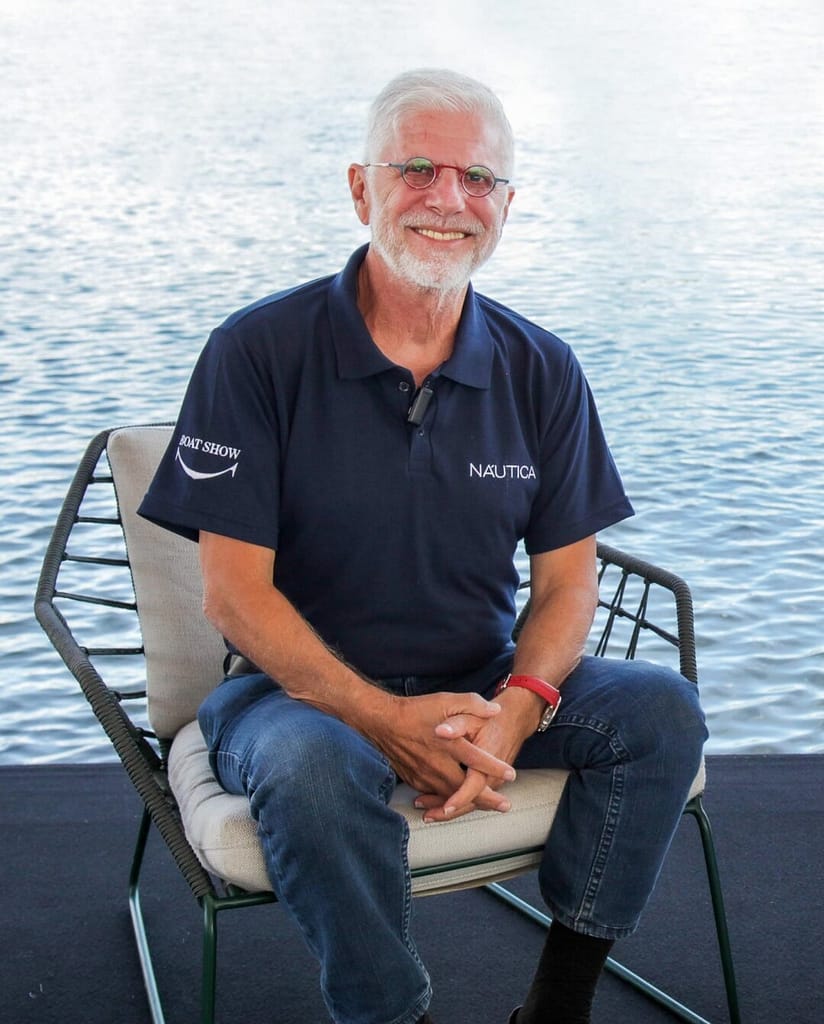
“After decades in the nautical sector, I realised it wasn’t enough to bring people closer to the water — we needed to show how to navigate in a truly conscious way.”
— Ernani Paciornik, Founder & Chairman, JAQ / Grupo Náutica
A three-phase mission to full autonomy
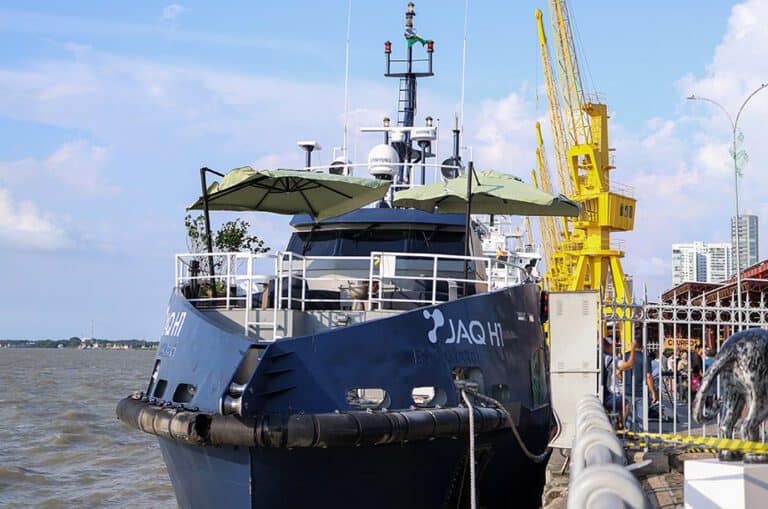
The project unfolds in stages — a methodical march toward total self-sufficiency at sea.
| Phase 1 · 2025 | Carbon-free hospitality. The JAQ H1 debuted at COP30 with all onboard services — lighting, air conditioning, kitchen, laundry, entertainment — running entirely on green hydrogen. Zero emissions inside the vessel, full comfort aboard. |
| Phase 2 · 2026 | Hybrid propulsion. Dual MAN engines are being installed, enabling a 20% hydrogen mix in the propulsion system — cutting overall CO₂ output by up to 80% compared to pure diesel operation. |
| Phase 3 · 2027 | Full onboard hydrogen production. The companion vessel JAQ H2 (50 metres, designed for deep-water research to 300m depth) will carry an onboard electrolyser capable of producing green hydrogen at sea and supplying both ships — complete energy independence. |
A floating laboratory for Brazil’s waters
Beyond its engineering story, the JAQ H1 has a scientific soul. Its mission is to cruise the 7,491 kilometres of Brazil’s coastline and the vast 105,000-kilometre river network of the Amazon basin, acting as an advanced floating laboratory. Researchers aboard will study marine and riverine biomes, protect coral reefs, and contribute data to UNESCO’s Ocean Decade programme.
In early 2026, the ship embarked on its “Water Tour” — a journey through Brazilian port cities, arriving first in Maranhão, turning the vessel into a travelling classroom. Local schoolchildren, scientists, engineers, and port authorities have been invited aboard to witness the technology first-hand and understand that the energy transition in maritime transport is no longer a distant dream.
The partnership behind the breakthrough
The project is a collaboration between Grupo Náutica, Itaipu Parquetec — a pioneering sustainable technology park with over a decade of experience in green hydrogen — and GWM, the Chinese automaker whose hydrogen division FTXT provides the fuel cell stacks. The investment of R$150 million was raised entirely from private sources, a testament to the commercial confidence in the technology.
Bloomberg New Energy Finance projections place Brazil as the most globally competitive market for green hydrogen production, making this a natural home for the world’s first fleet of onboard-hydrogen-producing research vessels. Maritime shipping currently accounts for roughly 3% of global CO₂ emissions — and currently, hydrogen is barely used in ocean-going vessels. The JAQ project is a direct challenge to that status quo.
“We want to return to the water what it gave us.”
— Ernani Paciornik, at the JAQ H1 inauguration in Belém
In a world still debating 2030 and 2050 targets, a 36-metre ship is already gliding through Brazilian waters powered by the most abundant element in the universe. The future, it turns out, was already here — it just needed somewhere to dock.